The West’s crisis did not begin in the modern era. It began when Rome separated from the one, holy, catholic, and apostolic Church in the 11th century. The theological innovations that followed gradually altered the Western understanding of God, man, salvation, and authority. Those innovations eventually produced the conditions that made the Protestant Reformation inevitable.
The Reformation was not a return to the apostolic faith. It was a reformation of a church that had already departed from the theological consensus of the first millennium. Both Rome and Protestantism ultimately represent divergent paths from the same point of departure. For centuries, the West has attempted to resolve problems generated by earlier theological errors, only to create new ones.
The Protestant world, particularly as expressed through the Anglo-American Enlightenment, attempted to build civilization upon a broadly theistic foundation while leaving fundamental theological questions deliberately undefined. America’s founding documents appeal to a Creator, yet they never identify who that God is or what His nature is. The assumption is that all Christians worship the same God and share the same theological understanding.
History demonstrates otherwise.
Doctrine is not secondary
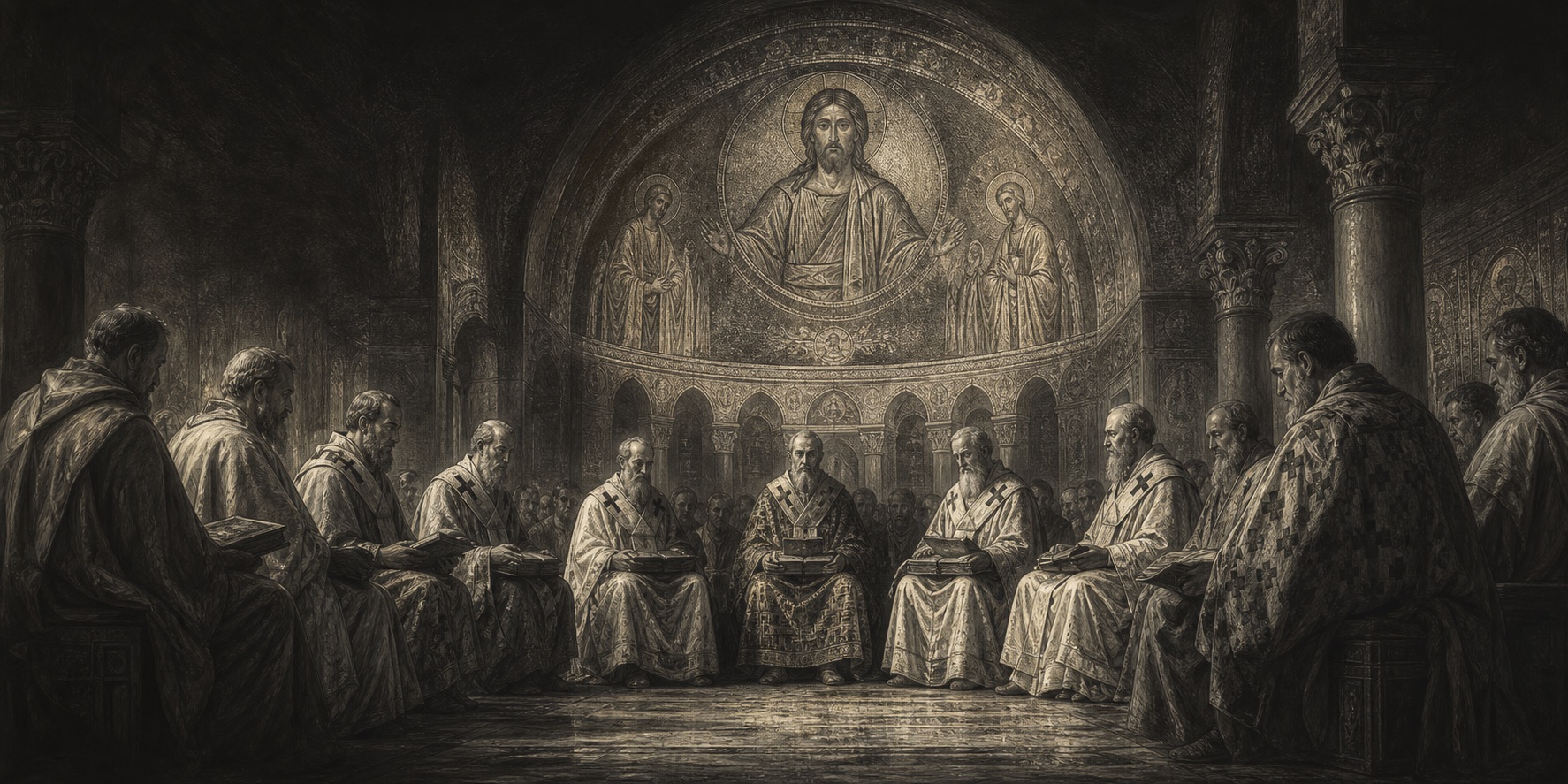
The Ecumenical Councils were not convened over secondary issues. They existed because the identity of Christ determines everything else. Is Christ created or eternally begotten? What is His relationship to the Father? What occurred on the Cross? Was the crucifixion merely a legal transaction in which the Father’s wrath was transferred onto Christ? If so, does that require Christ to be treated as guilty before the Father? Such questions are not academic; they define Christianity itself.
Christ is God. He is not merely a moral teacher or an innocent substitute. Any account of the atonement that requires the divine Son to become legally guilty before the Father introduces profound theological difficulties concerning the unity of the Trinity and the immutable nature of God.
The Fathers understood that doctrine is not optional. It is the foundation upon which worship, morality, politics, and civilization rest.
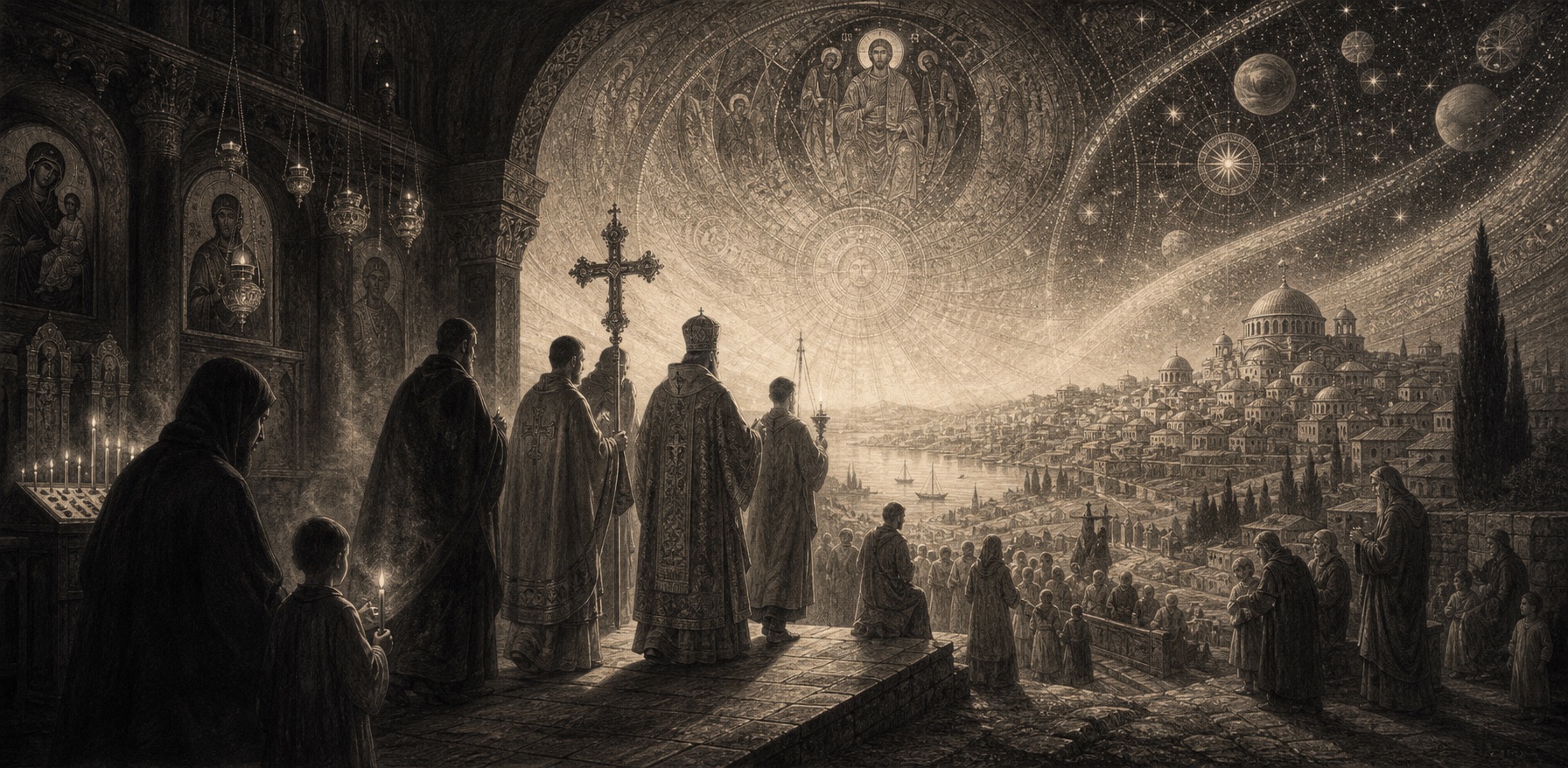
There is another path: the theology of the first thousand years of Christian history—the faith preserved through apostolic succession in the Holy Orthodox Catholic Church.
Authority and fragmentation
Modern atheism has largely exhausted itself. It promised objective morality without God, meaning without transcendence, and reason detached from revelation. It has not succeeded. It has instead produced societies increasingly characterized by nihilism, fragmentation, and the loss of any coherent account of what man is or what he is for.
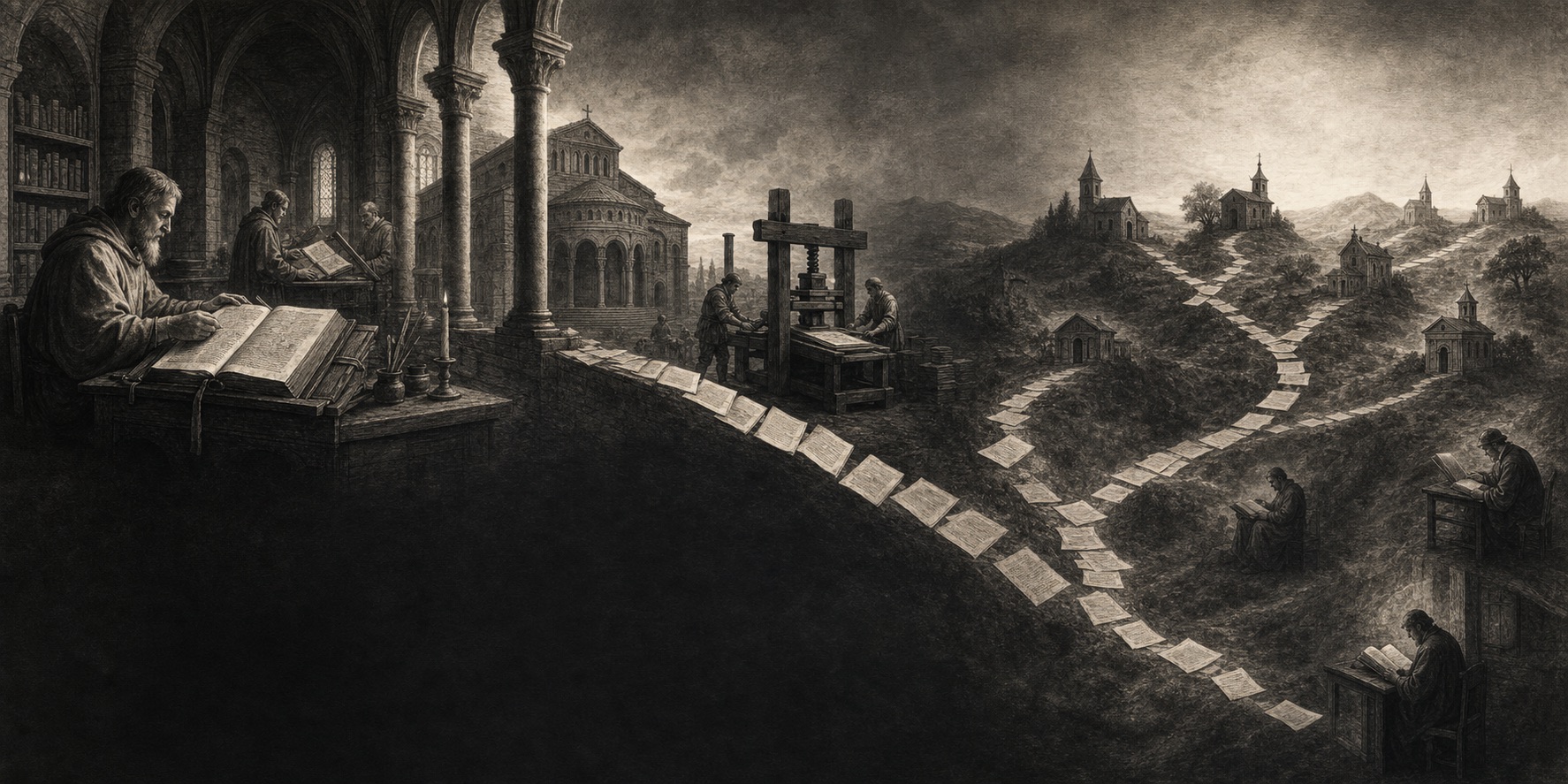
Protestantism has likewise reached its logical conclusion. Once Scripture becomes detached from the Church that canonized, preserved, and authoritatively interpreted it, every individual becomes his own final authority. Thousands of denominations, contradictory doctrines, prosperity theology, celebrity pastors, and endless fragmentation are not historical accidents. They are the consistent outworking of private interpretation.
If two sincere Christians arrive at completely opposite interpretations of Scripture, who possesses the authority to determine which interpretation is faithful to apostolic teaching? If no visible authority exists, then each believer ultimately becomes the highest authority for himself.
A faith with no final authority inevitably dissolves into competing opinions.
The myth of neutrality
The Enlightenment project suffers from the same weakness. It sought to establish politics upon supposedly universal principles independent of revealed theology. Concepts such as “self-evident truths” are asserted rather than metaphysically grounded. Yet no moral claim is genuinely self-evident simply because it is declared to be so. Every moral system presupposes a deeper account of reality, human nature, and the source of moral obligation.
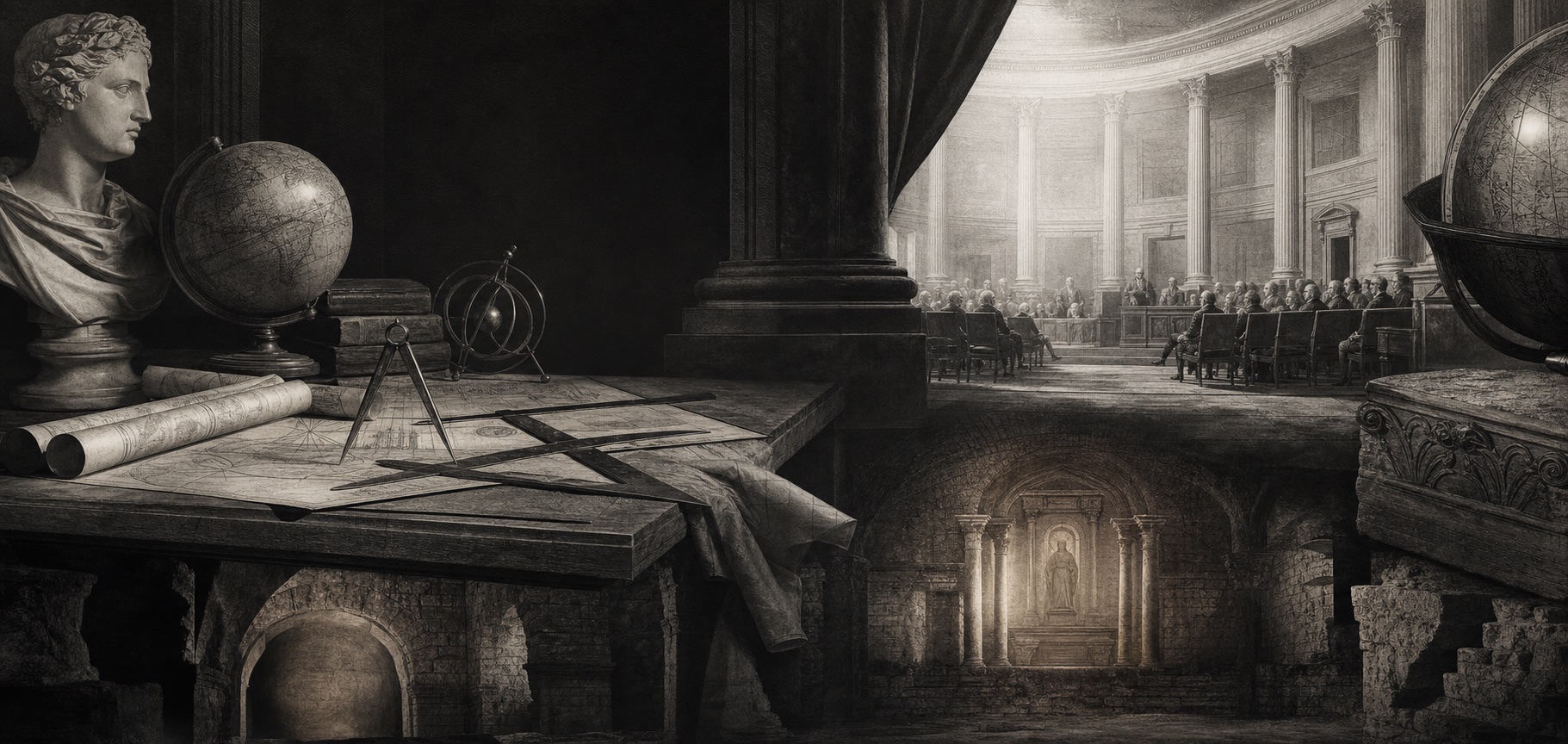
There is no neutral public square. There is no religiously neutral society. Every civilization worships something. Every legal order rests upon a metaphysic. Every state ultimately answers the question: What is the highest good?
If the Church does not shape a civilization’s moral imagination, the State inevitably will. Secularism does not eliminate religion; it merely replaces transcendent religion with an immanent one. The State assumes the role once occupied by the Church, defining morality, identity, virtue, and even anthropology.
Order and transformation
Political structures alone cannot overcome man’s fallen nature. No constitutional arrangement can substitute for spiritual transformation. Every system of government reflects theological assumptions about human beings, authority, justice, and the purpose of society.
The biblical pattern consistently presents hierarchy and ordered authority, not radical individual autonomy. Throughout the Old Testament, God governs His covenant people through kings, priests, and prophets. The Christian Roman Empire and the Orthodox kingdoms that followed understood society as a symphony between Church and State: distinct authorities with distinct jurisdictions, cooperating toward the common good while remaining neither identical nor independent of one another.
Hierarchy is not an arbitrary human invention. Properly ordered authority is woven into creation itself because reality reflects the order established by God.
Restore the foundation
The crisis of the modern West is therefore not primarily political or economic. It is theological. Until the foundation is restored, no political reform, constitutional amendment, or economic system can ultimately heal the civilization built upon it.
Explore the questions behind the essay in the interactive Wayfinder.
Open the WayfinderFollow the philosophical and theological decision map in English or Castilian Spanish.
Join the conversation